

2026 Ford Transit Cargo Van Trim & Configuration Comparison
The 2026 Ford Transit Cargo Van works a little differently from most vehicles we sell at Fairway Ford. There isn’t a lineup of named trims like XL, XLT, or Lariat. Instead, you build the Transit around the job by choosing the weight rating, roof height, length, engine, drivetrain, and equipment your business actually needs. That flexibility is one of the Transit’s biggest strengths. A local service business may need a relatively compact T-150, while a contractor carrying heavier equipment may be better served by a high-roof T-350. Here’s how the 2026 Transit Cargo Van lineup breaks down.
How the 2026 Transit Cargo Van Lineup Works
The Cargo Van uses one primary equipment group, Cargo Van 101A, and is available in several weight classifications:
- Transit T-150
- Transit T-250
- Transit T-350
- Transit T-350 HD configurations
Those numbers are tied primarily to vehicle weight ratings and capability rather than increasingly luxurious trim levels. From there, you can choose among different:
- Roof heights
- Body lengths
- Engines
- Rear-wheel drive or available all-wheel drive
- Payload ratings
- Towing equipment
- Driver-assistance features
- Upfitting and trade packages
That means the best Transit for an electrician may look very different from the best Transit for a delivery company.
What Comes Standard on the 2026 Transit Cargo Van?
The 2026 Transit received a useful technology update. Standard equipment includes:
- 12-inch SYNC 4 center touchscreen
- Wireless Apple CarPlay and Android Auto compatibility
- New 8-inch digital instrument display
- 5G modem
- Keyless entry with push-button start
- Rear View Camera
- Front and rear parking sensors
- Lane-Keeping System
- Pre-Collision Assist with Automatic Emergency Braking
- Auto High-Beam Headlamps
- Ford Co-Pilot360
- Vehicle Maintenance Monitor
Ford also updated the Transit’s electrical architecture for 2026 to improve connectivity and support over-the-air software updates. That gives even a work-focused Cargo Van a much more modern cab than many buyers may expect.
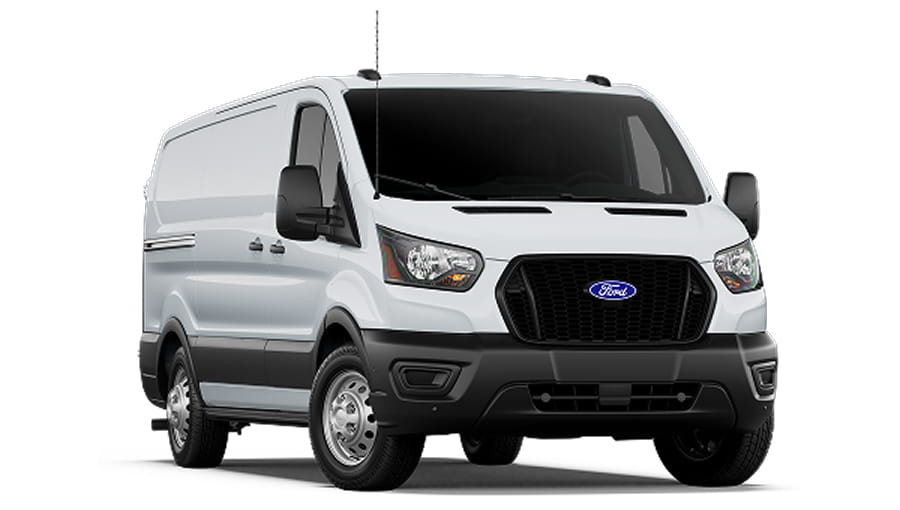
2026 Transit T-150
T-150 is the lighter-duty starting point within the gas Transit Cargo Van family. It is available in configurations including:
- Low roof
- Medium roof
- 130-inch or 148-inch wheelbase depending on configuration
- Rear-wheel drive
- Available Intelligent AWD
The T-150 makes sense for businesses that need enclosed cargo space but aren’t carrying the heaviest loads every day. Good uses can include:
- Local delivery
- Cleaning businesses
- Light electrical or plumbing work
- Parts delivery
- Property maintenance
- Mobile sales or service
If your primary concern is keeping the van manageable while still getting a lot more enclosed storage than a pickup provides, T-150 is a good place to begin.
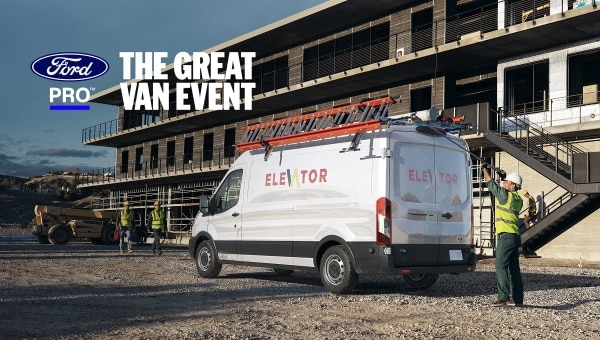
2026 Transit T-250
T-250 steps up the vehicle’s gross weight rating and gives you more payload flexibility. Ford offers T-250 Cargo Vans in low-, medium-, and high-roof configurations, depending on length and drivetrain. This is a particularly useful middle ground for contractors and service businesses. A T-250 may be the right fit for:
- HVAC companies
- Electricians
- Plumbers
- General contractors
- Equipment installers
- Mobile repair businesses
- Delivery companies carrying heavier loads
We currently carry multiple 2026 Transit-250 Medium Roof Cargo Vans, so this is also a configuration you can often compare in person rather than ordering completely blind.
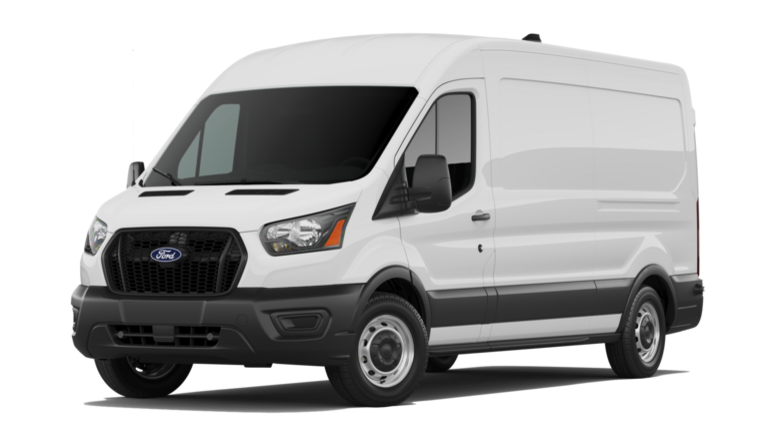
2026 Transit T-350 and T-350 HD
T-350 moves toward the heavier end of the Transit Cargo Van range. It can be configured with medium- or high-roof bodies, and higher-capacity T-350 HD versions are available for businesses that need even more payload capability. The maximum 2026 Transit Cargo Van payload reaches 5,103 pounds in a properly configured T-350 HD High Roof Extended Length Cargo Van with rear-wheel drive and dual rear wheels. That maximum figure doesn’t apply to every T-350, so payload should always be checked on the specific van. T-350 and T-350 HD configurations are particularly relevant for:
- Heavy commercial equipment
- Large shelving systems
- Mobile workshops
- Heavier trade upfits
- High-volume delivery
- Businesses carrying substantial tools and materials
We stock multiple 2026 high-roof Transit-350 Cargo Vans, including dual-rear-wheel configurations.
2026 Transit Cargo Van Engine Options
There are two gas engines for the 2026 Transit Cargo Van.
3.5L PFDi V6
The standard 3.5L PFDi V6 produces:
- 275 horsepower
- 260 lb.-ft. of torque
It is paired with a 10-speed automatic transmission. For many local delivery routes and everyday commercial applications, this engine provides a straightforward starting point.
3.5L EcoBoost V6
The available twin-turbocharged 3.5L EcoBoost V6 produces:
- 300 horsepower
- 400 lb.-ft. of torque
It also pairs with the 10-speed automatic. The big difference is torque. If the van regularly carries substantial weight, tows a trailer, or spends a lot of time loaded on hills around Northeast Ohio, the EcoBoost may be worth comparing.
Is There a Hybrid 2026 Ford Transit?
No. The gas Transit Cargo Van does not have a hybrid or plug-in hybrid powertrain for 2026. Businesses interested in an electric Transit can instead look at the E-Transit, which is a separate all-electric commercial van. The 2026 E-Transit Cargo Van uses an electric powertrain rather than combining a gas engine and battery like a hybrid. That distinction is important when you’re comparing operating needs, charging access, route length, and upfit requirements.
Low Roof vs. Medium Roof vs. High Roof
Roof height may matter even more than engine choice for some businesses.
Low Roof
The low-roof Cargo Van provides approximately 56.9 inches of maximum interior cargo height. It makes sense when:
- Parking garages matter
- Overall vehicle height is a concern
- Drivers primarily load from outside
- You don’t need to stand inside the cargo area
Medium Roof
The medium-roof Transit increases maximum interior cargo height to about 72 inches. For many tradespeople, this is the sweet spot. It gives you considerably more room to move around inside while remaining shorter than the high-roof version.
High Roof
The high roof provides up to approximately 81.5 inches of interior cargo height. That makes it much easier for many adults to stand upright inside the cargo area. For electricians, HVAC technicians, plumbers, mobile service technicians, and other businesses that essentially turn the van into a moving workspace, high roof can be a major advantage.
Regular, Long, and Extended Transit Cargo Vans
Cargo volume changes dramatically depending on body configuration.
| Configuration | Cargo Volume Behind First Row |
|---|---|
| Regular Low Roof | 246.7 cu. ft. |
| Long Low Roof | 277.7 cu. ft. |
| Long Medium Roof | 357.1 cu. ft. |
| Long High Roof | 404.3 cu. ft. |
| Extended High Roof | 487.3 cu. ft. |
The Extended High Roof is the volume leader, providing up to 487.3 cubic feet behind the front seats. Maximum available cargo volume can reach 536.4 cubic feet when configured with the front passenger seat removed. More space isn’t automatically better, though. A larger van can affect parking, maneuverability, purchase price, and how easy it is to move around tight job sites. Match the body length to what you actually carry.
Rear-Wheel Drive vs. All-Wheel Drive
Rear-wheel drive is standard, while Intelligent AWD is available on many Transit Cargo Van configurations. AWD can be particularly attractive for businesses operating throughout Northeast Ohio winters or traveling to rural job sites. Ford integrates the available AWD system without raising the Transit’s load floor, which helps preserve cargo usability. For businesses that rarely leave maintained roads, RWD may be all you need. For crews that have to show up regardless of snow or changing road conditions, AWD deserves a closer look.
How Much Can the 2026 Ford Transit Tow?
The 2026 Transit Van can tow up to 6,900 pounds when properly equipped with the available Heavy-Duty Trailer Tow Package. The package includes equipment such as a frame-mounted hitch receiver and trailer wiring provisions. Actual towing capacity varies by configuration, so if your business regularly pulls equipment, tell us what the trailer weighs before choosing the van.
Trade Packages and Upfitting
For a commercial buyer, what goes inside the van can be just as important as the van itself. Transit offers available trade-focused equipment designed around specific types of work, including:
- Electrician Trade Package
- HVAC Trade Package
- General Contractor Trade Package
- Foldable Aluminum Shelving
- Wall Liner Kit
- Upfitter equipment and electrical provisions
These packages can add shelving, bins, drawers, work surfaces, storage systems, and other equipment designed around commercial use. If you’re already planning an upfit, talk with us before ordering the van. Payload, roof height, body length, electrical needs, and equipment weight should all be considered together.
Which 2026 Transit Configuration Is Right for Your Business?
For local delivery, consider a T-150 or T-250 with a low or medium roof if maximum interior height isn’t necessary. For electricians, plumbers, HVAC technicians, and contractors, a T-250 or T-350 Medium or High Roof gives you more room for shelving, tools, and working inside. For heavier equipment and high-payload applications, look more closely at T-350 and T-350 HD configurations. For businesses that deal with snow-covered roads or rural job sites, available AWD may be worth adding. For maximum enclosed volume, the Extended High Roof provides the most cargo room. The important thing is to build around your normal workday rather than simply buying the largest Transit available.
Shop 2026 Ford Transit Cargo Vans at Fairway Ford
At Fairway Ford, we have a substantial commercial vehicle operation in Canfield, with Transit Cargo Vans, Super Duty trucks, chassis cabs, service bodies, dump trucks, and other vehicles built around business use. You can browse our 2026 Ford Transit Cargo Van inventory to see current T-150, T-250, and T-350 configurations. For additional commercial options, visit our Ford Commercial Vehicles page. We are located at 366 West Main Street in Canfield and work with contractors, business owners, fleet operators, and commercial customers throughout Northeast Ohio.
Frequently Asked Questions About the 2026 Ford Transit Cargo Van
How many trims does the 2026 Ford Transit Cargo Van have?
The Cargo Van does not use a traditional named trim ladder. It uses the Cargo Van 101A equipment group and is configured through T-150, T-250, T-350, and T-350 HD weight ratings along with different roofs, lengths, engines, drivetrains, packages, and upfits.
What engines are available in the 2026 Ford Transit Cargo Van?
The standard 3.5L PFDi V6 produces 275 horsepower and 260 lb.-ft. of torque. The available 3.5L EcoBoost V6 produces 300 horsepower and 400 lb.-ft. of torque. Both use a 10-speed automatic transmission.
Does the 2026 Ford Transit have a hybrid engine?
No. The gas Transit Cargo Van does not offer a hybrid or plug-in hybrid engine. Businesses interested in an electric commercial van can compare the separate Ford E-Transit.
What is the maximum payload of the 2026 Transit Cargo Van?
Maximum payload reaches 5,103 pounds on a properly configured T-350 HD High Roof Extended Length Cargo Van with rear-wheel drive and dual rear wheels. Payload varies substantially by configuration.
How much cargo space does the 2026 Transit Cargo Van have?
Cargo volume ranges by roof and length. The Extended High Roof configuration provides up to 487.3 cubic feet behind the first row, while maximum available cargo volume can reach 536.4 cubic feet with the front passenger seat removed.
Can I get AWD on a 2026 Ford Transit Cargo Van?
Yes. Rear-wheel drive is standard, and Intelligent AWD is available on many Transit Cargo Van configurations.
How tall is the inside of a high-roof Transit?
The 2026 high-roof Cargo Van provides up to approximately 81.5 inches of maximum interior cargo height, making it useful for businesses whose employees need to stand and work inside the van.
How much can a 2026 Ford Transit Cargo Van tow?
The Transit Van can tow up to 6,900 pounds when properly equipped with the Heavy-Duty Trailer Tow Package. Actual capacity depends on the specific vehicle.
Does Fairway Ford have 2026 Transit Cargo Vans in stock?
Yes. We often have multiple 2026 Transit Cargo Vans, including T-150 Low Roof, T-250 Medium Roof, and T-350 High Roof configurations. Inventory changes regularly, so check our current Transit Cargo Van inventory before visiting.
Build the Transit Around the Job
The 2026 Transit Cargo Van is about choosing the right tool. Start with how much weight you carry. Then consider how much cargo volume and standing room you need, whether AWD matters, and whether the standard V6 or higher-torque EcoBoost is a better match. From there, we can help you compare T-150, T-250, T-350, roof heights, body lengths, and upfit options at Fairway Ford.

